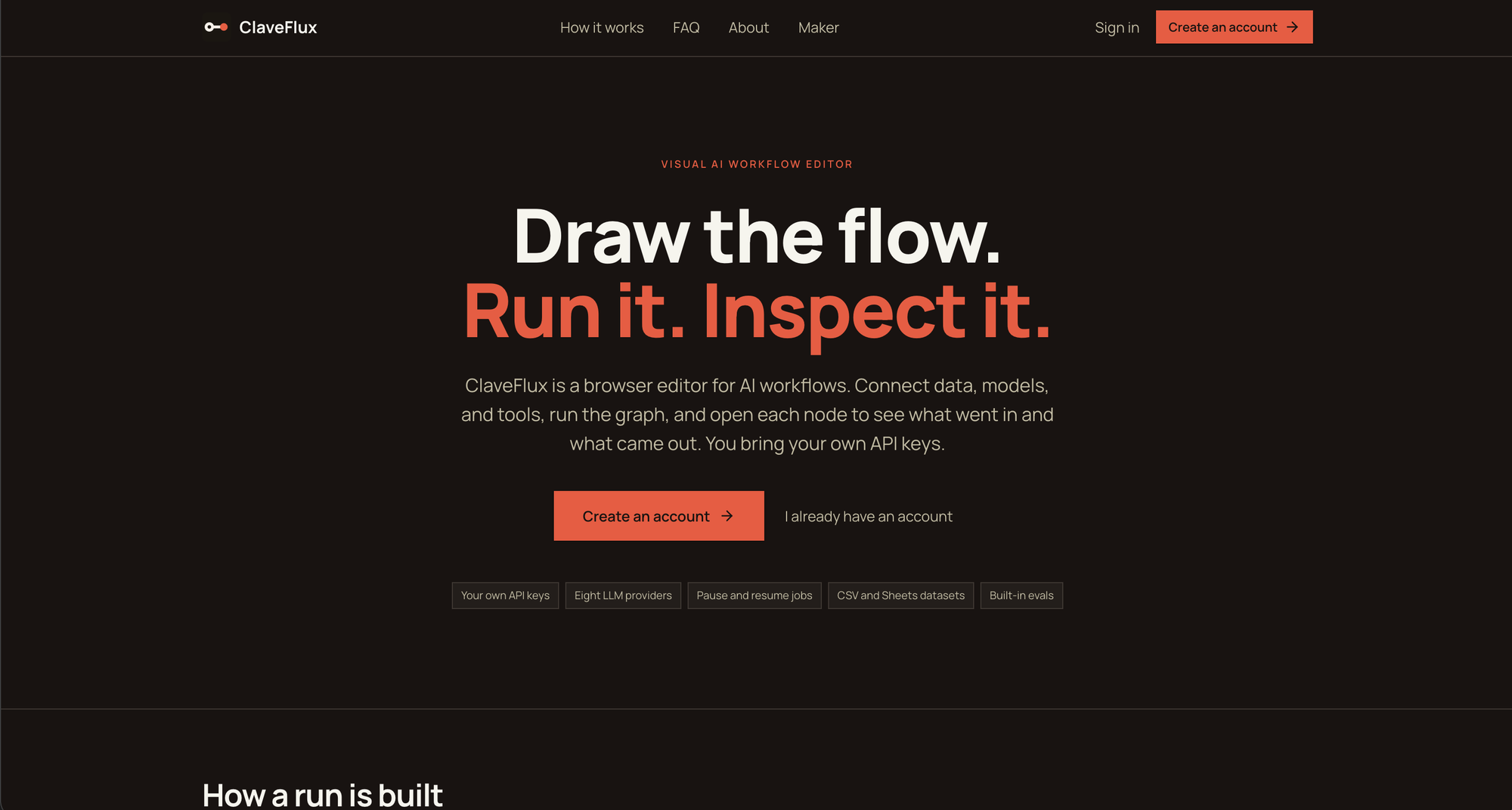
I wanted to start something which will support all my applications' backend. Then I thought of something like this app: Claveflux.
Key Flow.
Clave = key
Flux = flow
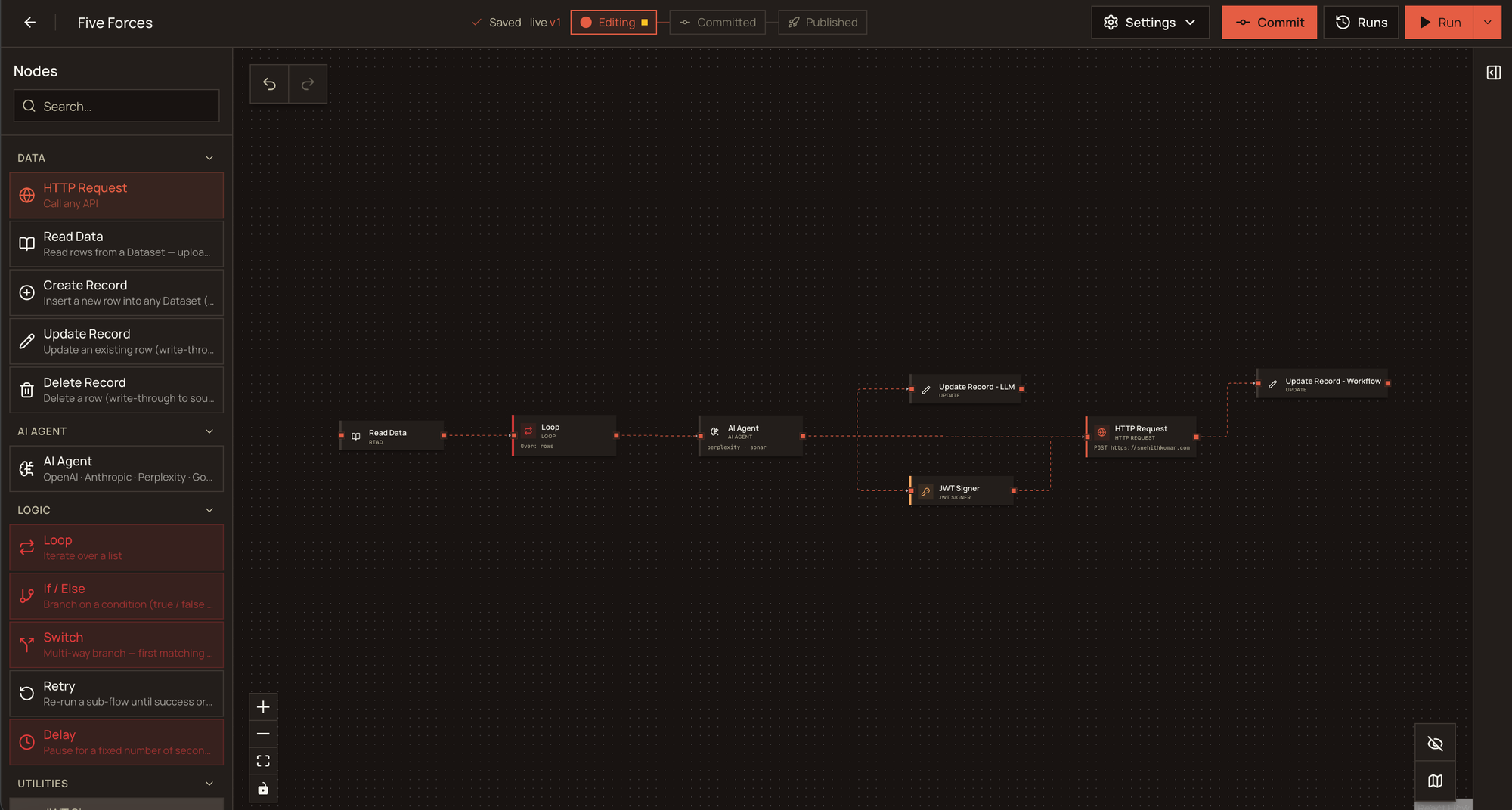
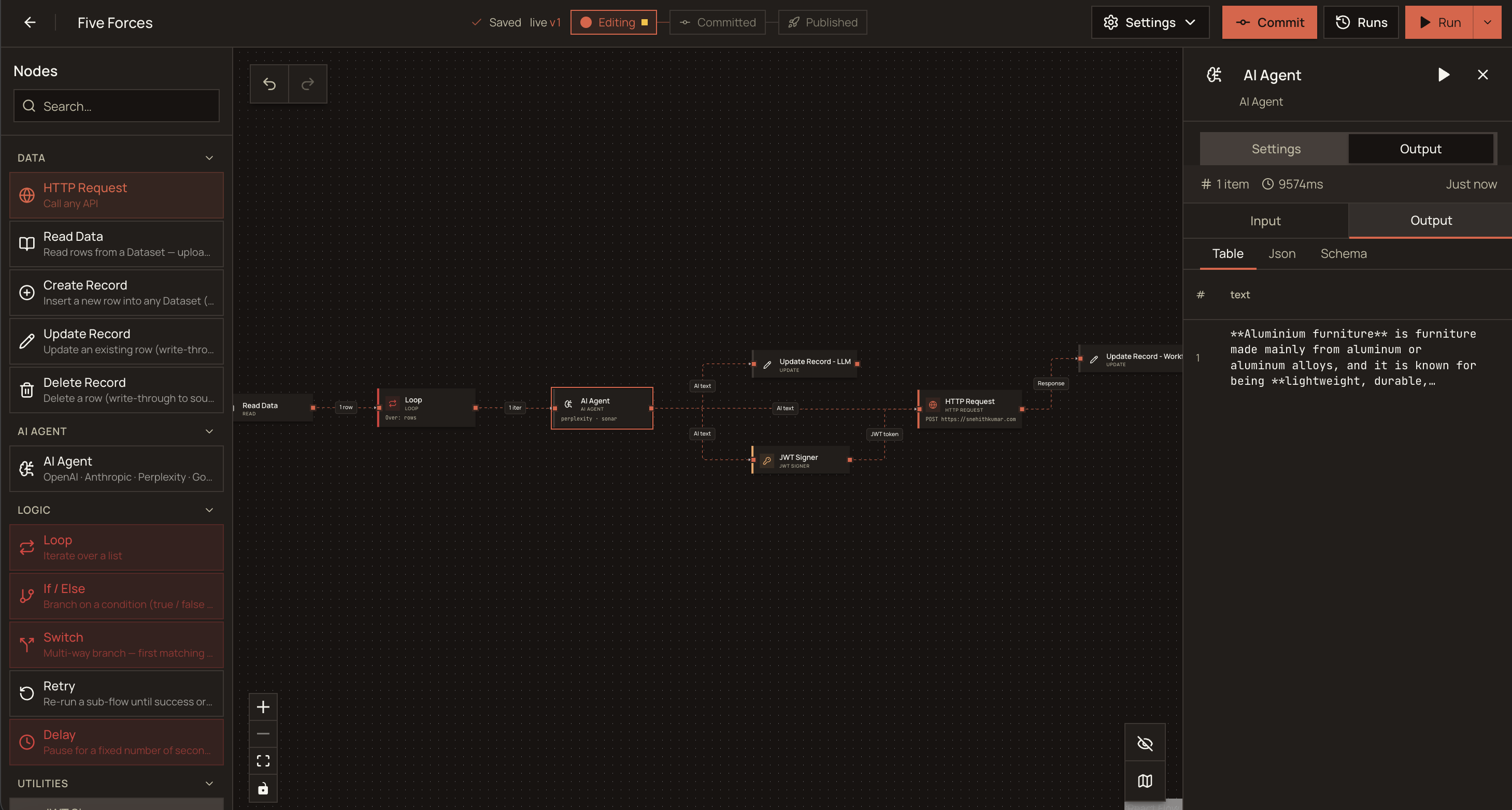
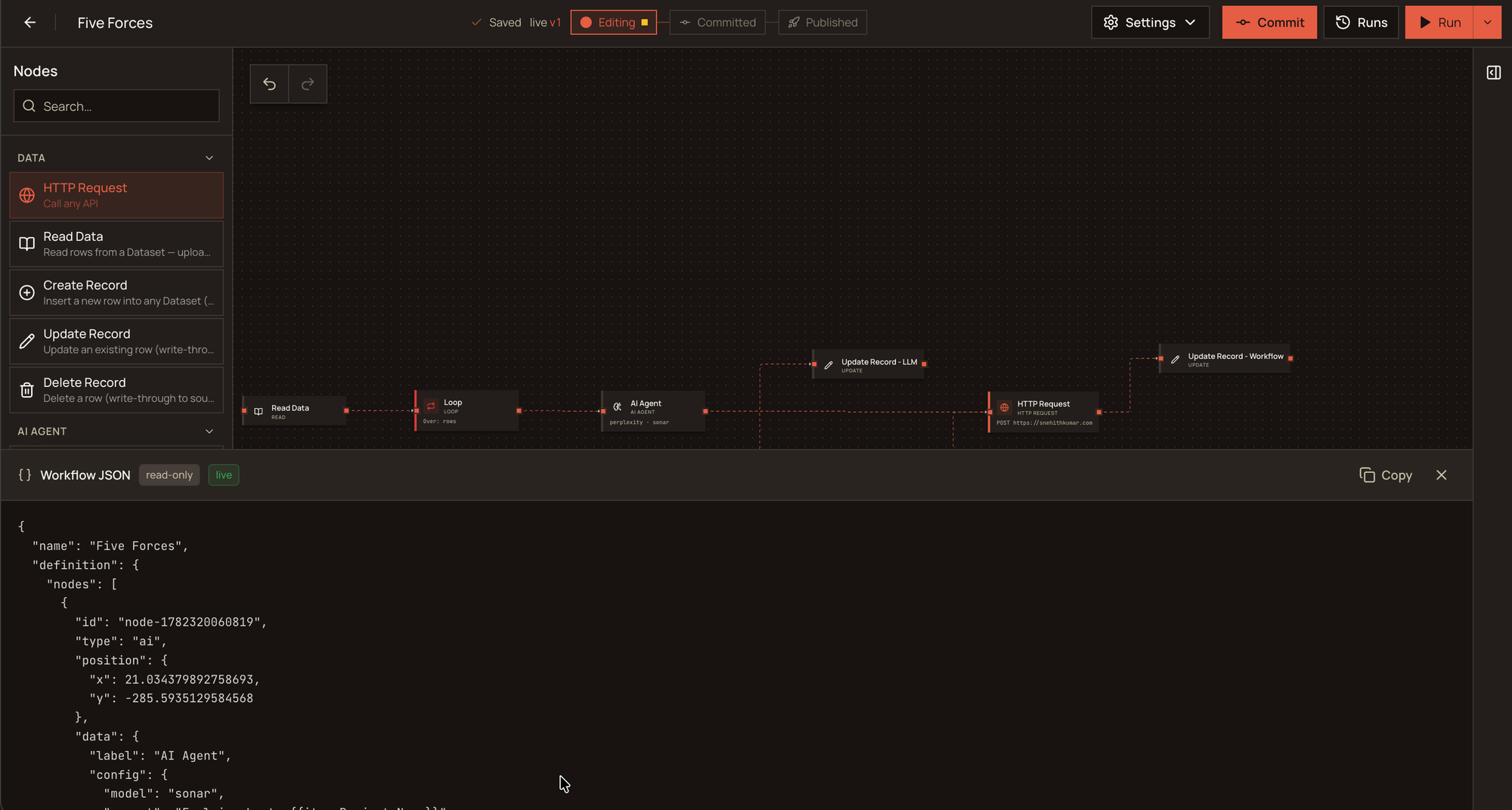
Coming to Claveflux: this is an orchestration application. You can build workflows the way you'd draw flow diagrams. Anyone can design and set up workflows. Easy peasy.
Before we dive into use cases, here's what Claveflux does in one short statement:
A visual editor for building and running AI workflows. Connect your data, plug in your own model keys, and watch each node run.
What the app has:
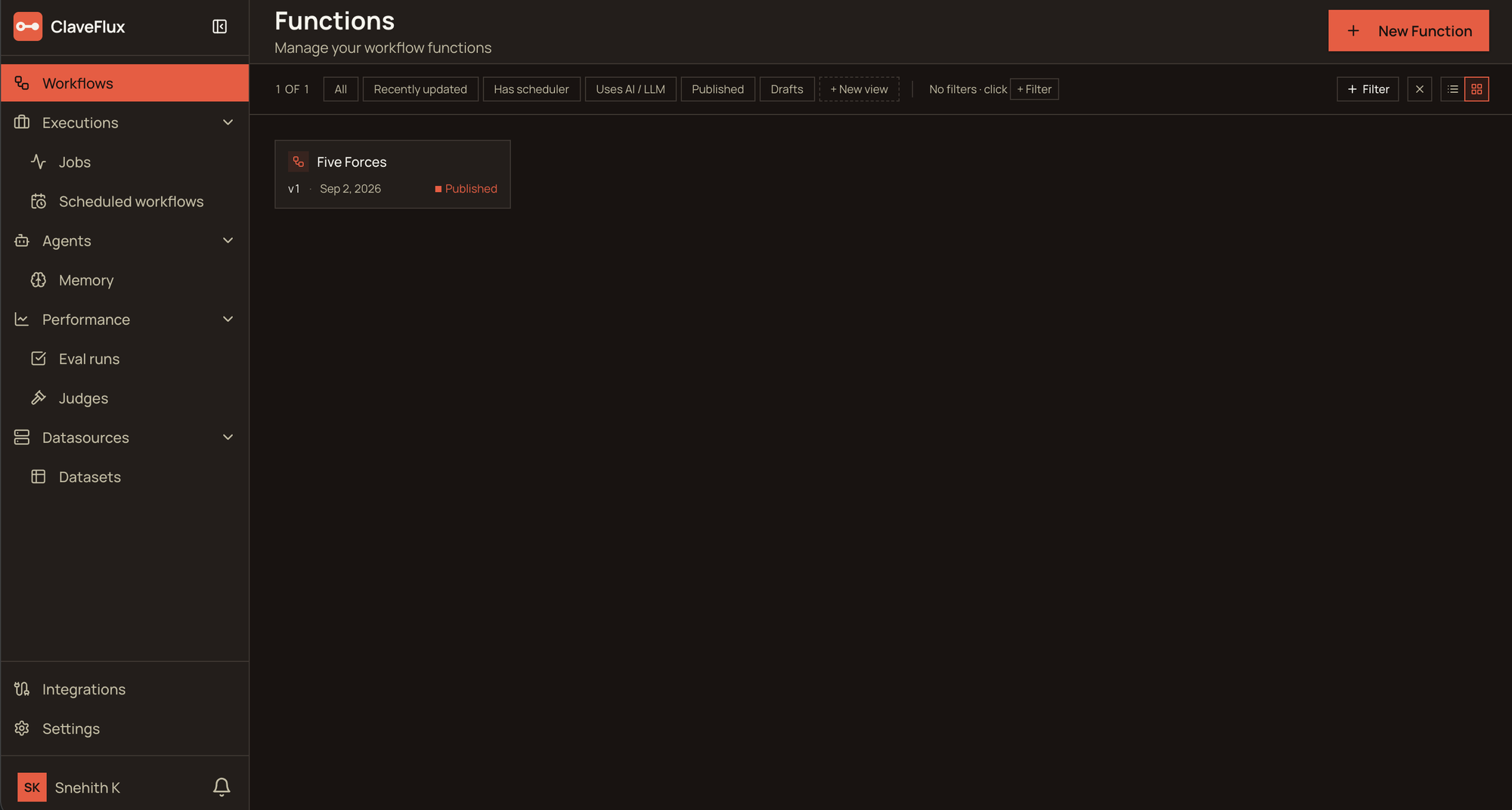
- Workflows (a function or workflow)
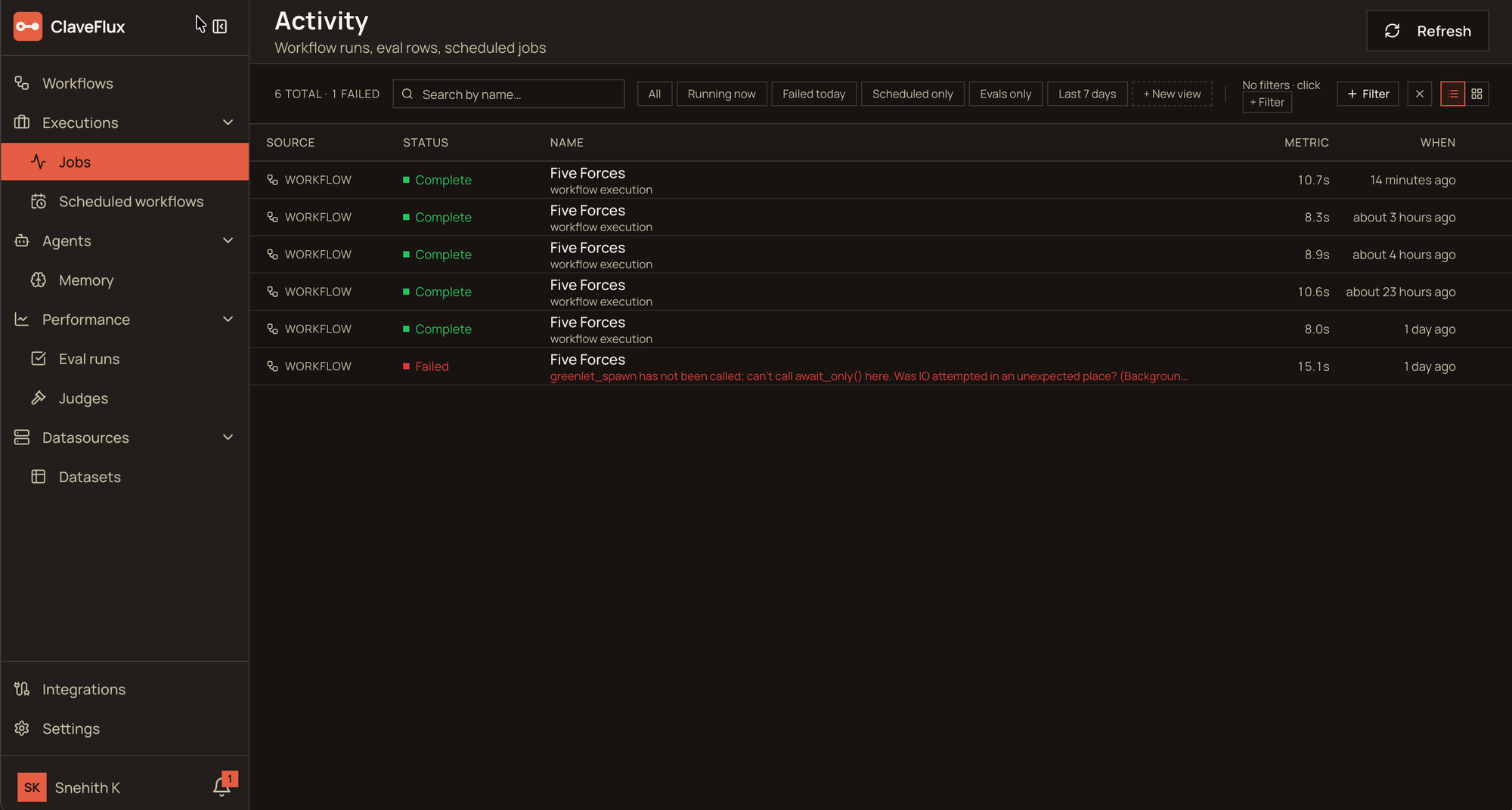
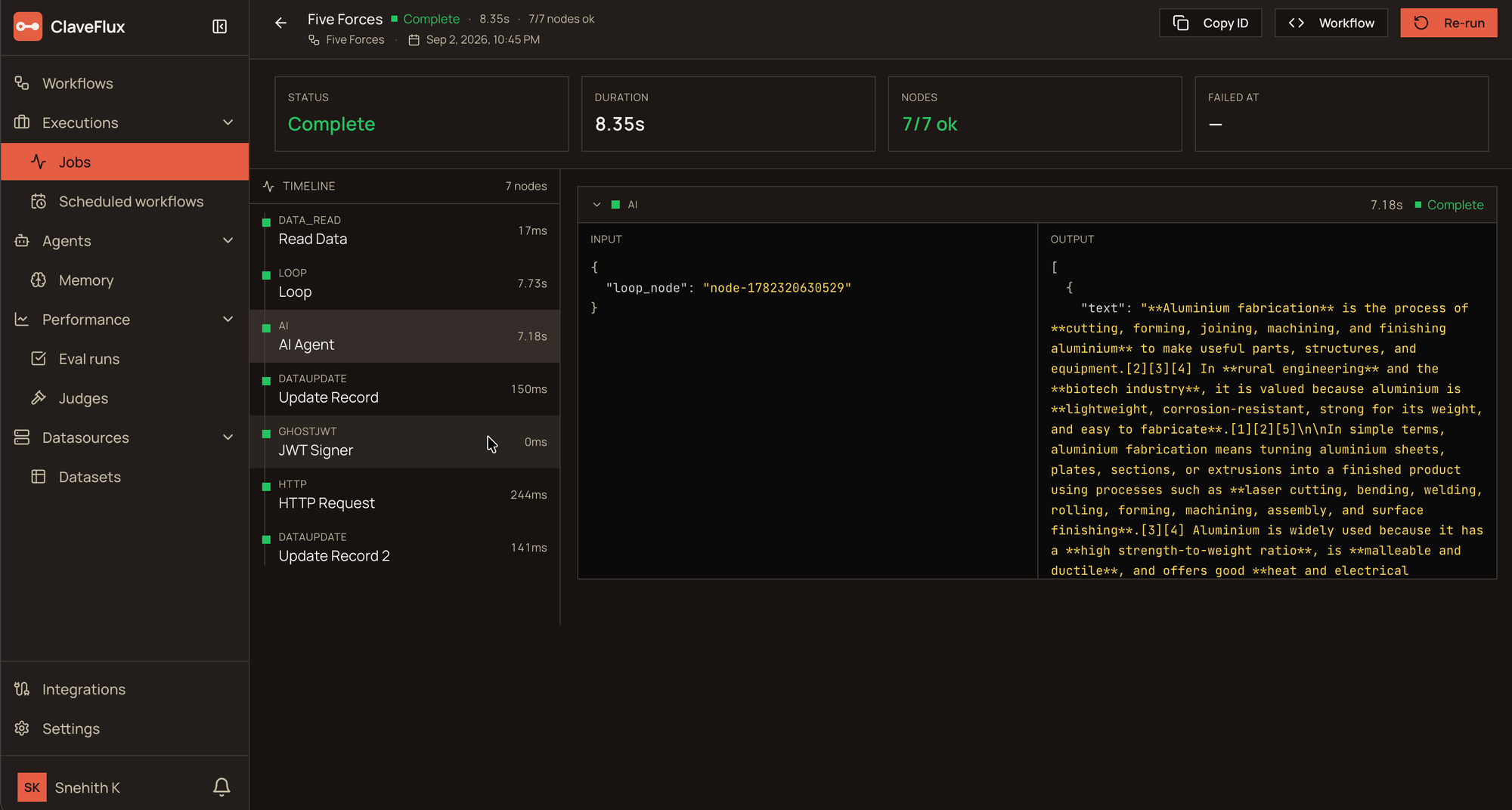
- Jobs (all the workflow runs)
- Scheduled workflows (run a workflow at a predefined time)
- Memory (each workflow has its own cached memory)
- Evaluation runs (use judges to run a workflow 100 times to get insights on how a designed workflow is performing, gather logs, and refine the workflow)
- Judges (default LLM agents that critique)
- Datasources (Google Sheets integration)
- Datasets (in-house tables)
Some use cases I came up with:
- You can build an automated blog post workflow. Use tables with data in them, then update based on their status from the workflow. Tune the workflow using evals and get it to work the way you want. Once you find the right workflow, schedule the workflow, and voila, it runs on its own based on the data in your datasets or datasources.
- You can build a hospital X-ray analyzer. Feed an in-house hospital dataset into the workflow and it analyzes each image and classifies it. This is a simple use case, but it could be genuinely helpful for small-scale hospitals.
- Any static task can be automated using the tools and features this application offers.
Nodes:
- HTTP Request
- Read Data
- Create Record
- Update Record
- Delete Record
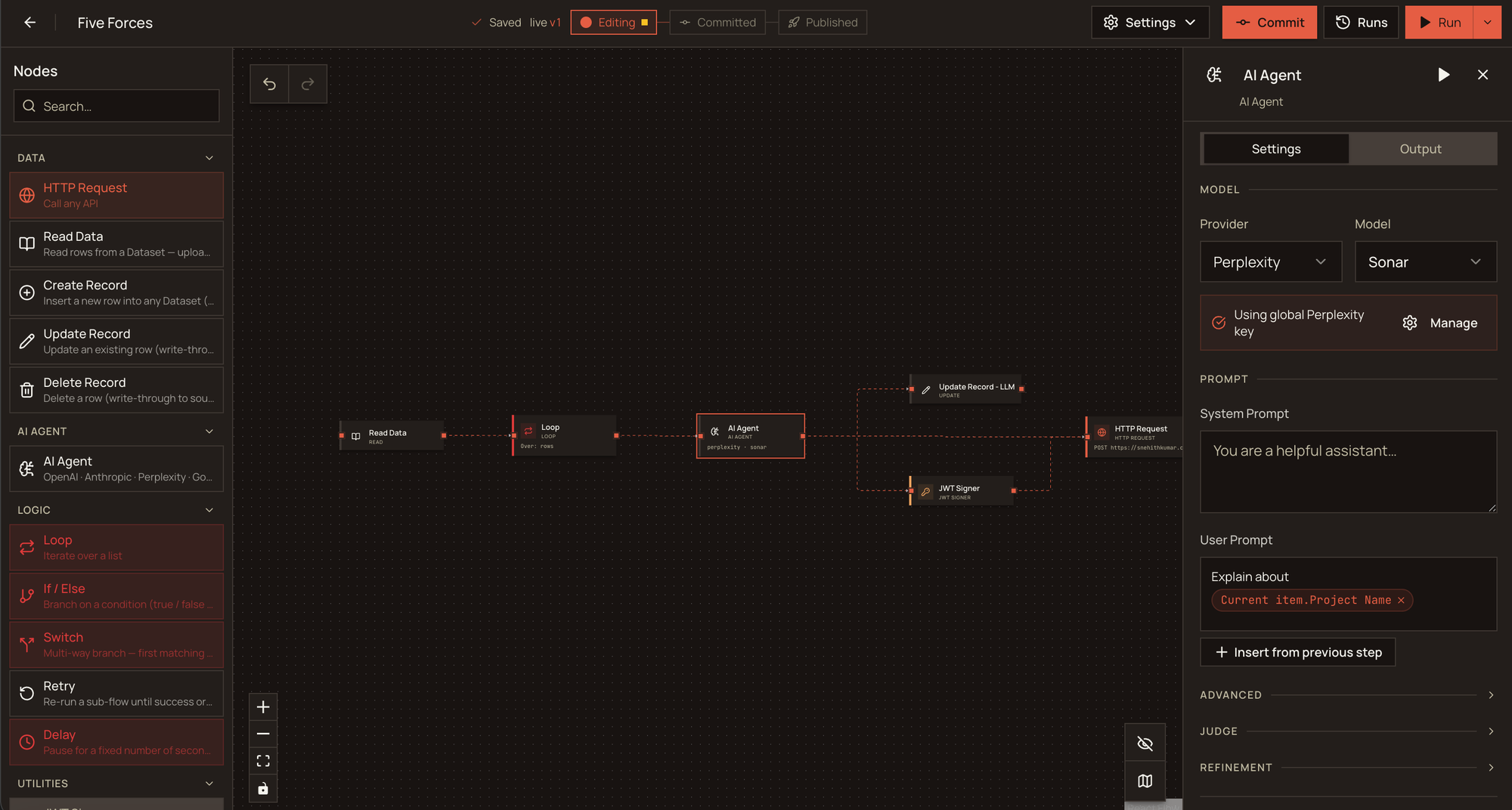
- AI Agent (Perplexity, Anthropic, OpenAI)
- Loop
- If/Else
- Switch
- Retry
- Delay
- JWT Signer
- Memory Get
- Memory Set
With these tool nodes, you can design any workflow based on your requirements and turn any static task into something automated.
I know what you're probably thinking: this looks like a cheap version of n8n. Honestly, I didn't build this with n8n in mind. I wanted to learn new technologies, and as part of that, build something meaningful I could use to support my future apps, like I mentioned at the start of this article.
Technologies used:
- Resend (Email)
- Google OAuth
- Google Sheets API
- Langfuse (LLM Observability)
- Sentry (Error Monitoring)
- Prometheus (Metrics)
- Celery Beat
- Celery Worker
- PostgreSQL + pgvector
- Redis
How it works
flowchart TD
    Browser[Browser] --> Nginx[Web - Nginx]
    Browser --> FastAPI[API - FastAPI]
    FastAPI --> Postgres[(Postgres)]
    FastAPI --> RedisQ[Redis - Celery Broker]
    RedisQ --> Worker[Celery Worker]
    Worker --> Postgres
    Worker --> RedisPS[Redis - Pub/Sub]
    RedisPS --> SSE[SSE Stream]
    SSE --> Browser
Future plans for this app:
Build an internal AI agent for the app itself, so when I ask for something, it creates workflows on its own for us.
URL: https://claveflux.com/
In the product